Milford Then & Now
Milford Then & Now: The Wadleigh Memorial Library
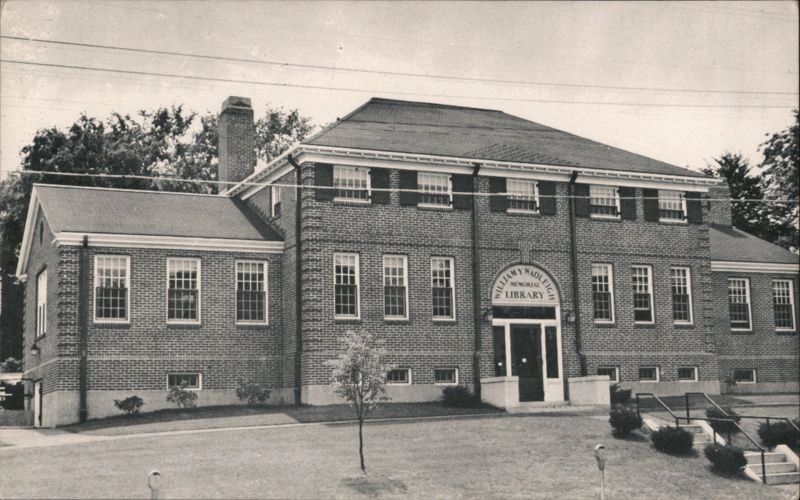
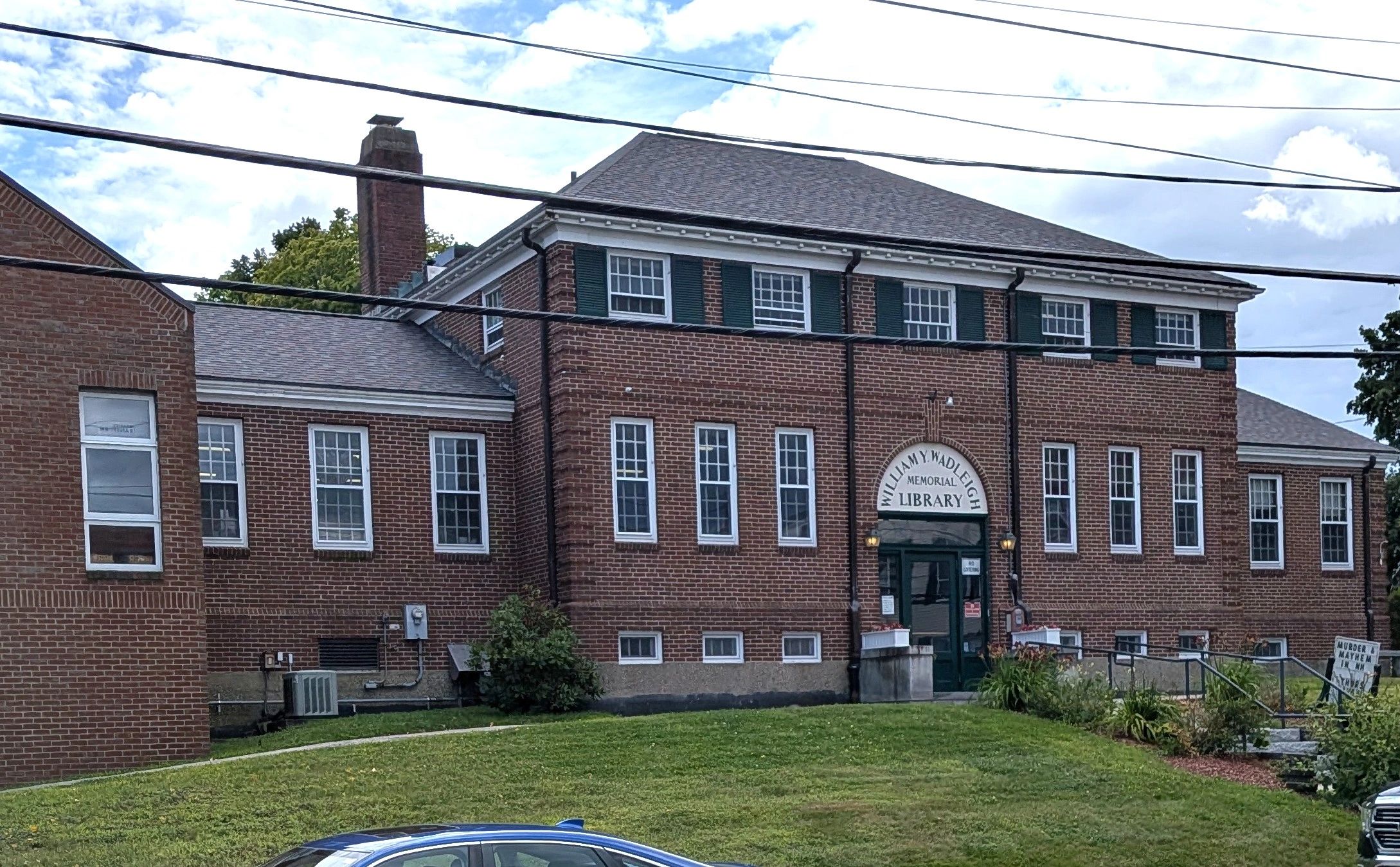
On July 19, 1950, about 150 Milford locals turned out for the dedication of the brand-new Wadleigh Memorial Library. As they gathered for fruit punch and snacks—and to tour the new structure—the remarks made on the occasion certainly spoke to the fears of the time.
The new building, across from the former library, represented a civic step up. The older structure had always seemed like the annex it was—one speaker referred to it as "a strangely designed library building attached to the east end of our town hall." The new structure, named after its donor, Fannie Boynton Wadleigh, was a stand-alone building designed to house some 20,000 books.
Both speakers had current events on their mind. Arthur Rotch, publisher of the Milford Cabinet, commented that "we find ourselves in probably the most perilous days since the dawn of civilization. The whole world seems hopelessly divided and science has furnished weapons capable of destroying not only armies but entire populations." It was truth, knowledge and public libraries that could rescue us from such peril, he argued.
John R. McLane, son of former New Hampshire governor and Milford native John H. McLane, also seemed to have the Cold War on the brain as he contrasted the new, free library to the burning of books in "totalitarian countries." McLane proved himself an able prognosticator, predicting a time when films might occupy a place in the library and when a "federation of libraries" might provide access to more materials. Indeed, a good portion of the 1950 Wadleigh building now houses the library's DVD collection, while interlibrary loan can bring you virtually anything in print within a couple of days.

Milford Then & Now
The Milford Post Office
In the late 1930s, Franklin D. Roosevelt's "alphabet soup" of federal agencies was going full steam, putting unemployed Americans back to work and spending New Deal money on local projects.
Even reliably Republican Milford got in on the act.
The town's new $76,000 post office was federally financed, though Milford granite and brick gave it some local flavor. Washington even helped decorate the place. Swedish immigrant Philip von Saltza was paid $700 for "Lumberman Log Rolling," his WPA mural that still hangs inside.
More than 500 people turned out before the post office officially opened. Republican U.S. Sen. Charles Tobey of nearby Temple praised the democratic nature of the postal service: "Whether you have three million or three cents, you can purchase a stamp." There was some irony in Tobey saying this inside a building paid for by Roosevelt's New Deal; he would become an outspoken critic of FDR and the growth of federal government.
Politics, however, could wait.
That evening, Milford residents danced inside the new post office to Savage's Orchestra. Anyone familiar with the post office lobby today may wonder exactly how much swaying was possible.
When the post office opened for business, dancing gave way to stamps and money orders. Arthur Dutton purchased a 3-cent stamp, and the first money order was made out to Joseph Shaughnessy.
And so, after the speeches, flags and dancing, Milford's new post office got down to the everyday business of delivering the mail.